GEM Thailand 2026" Seminar, Unpacking Strategies for Thai Entrepreneurs Navigating Global Competition
Bangkok University partnered with the Office of Small and Medium Enterprises Promotion (OSMEP) to host a seminar presenting the strategic adaptations of Thai entrepreneurs amid growing competition from foreign markets.
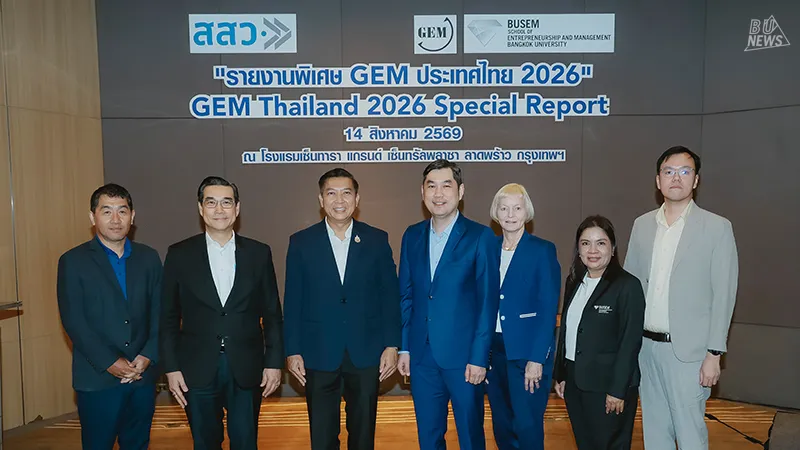
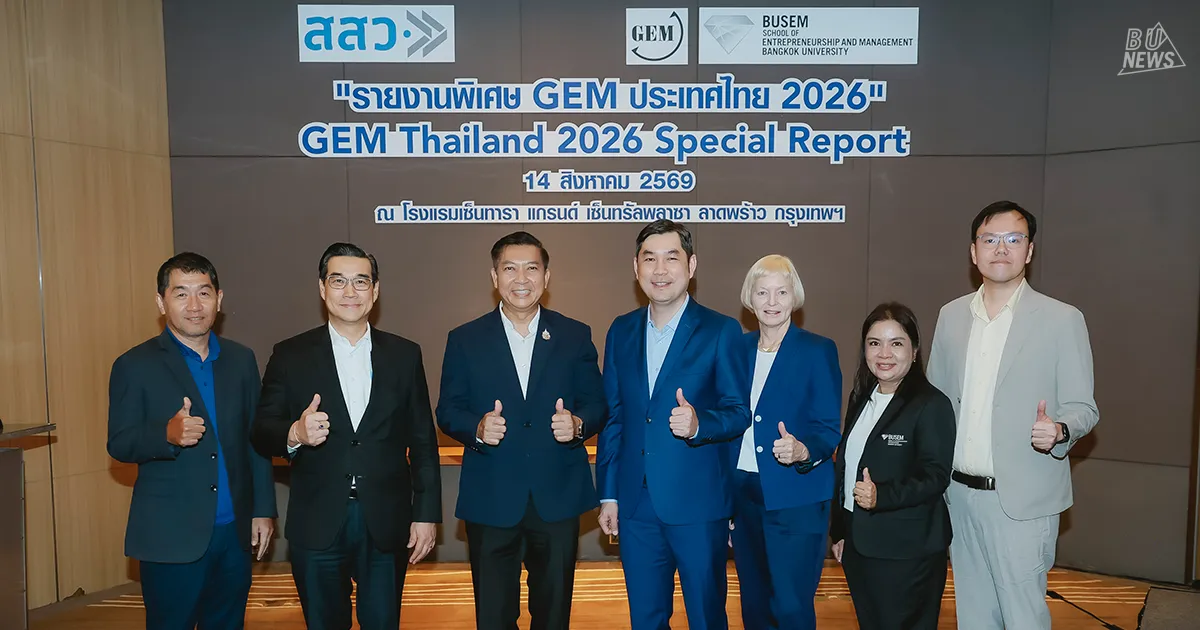
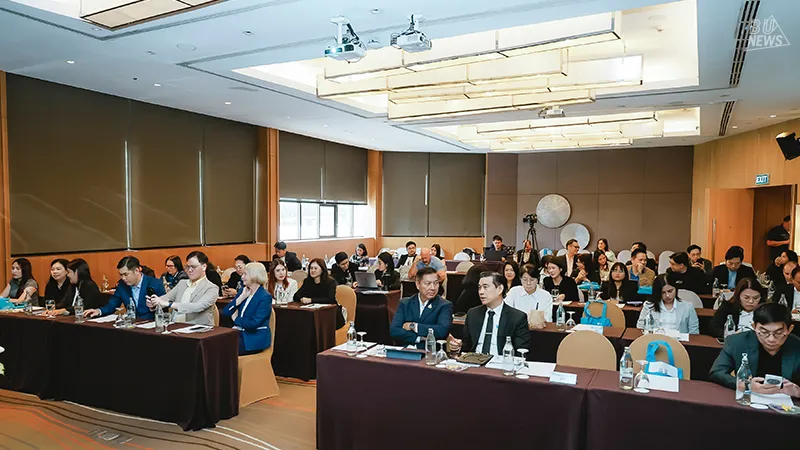
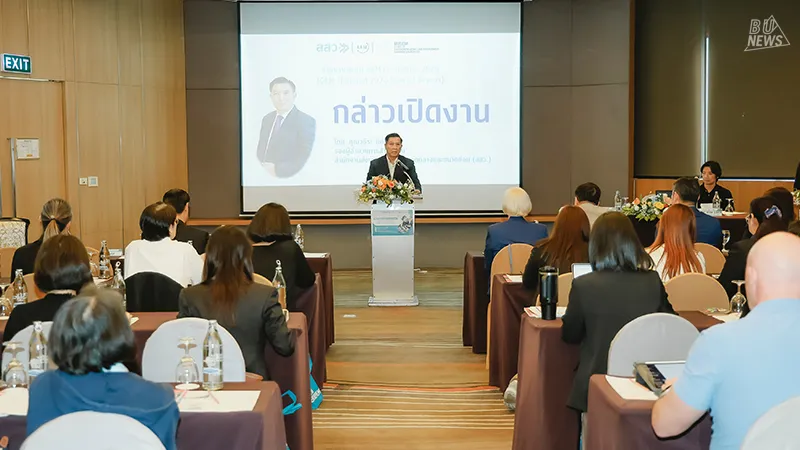
Bangkok University, together with the Office of Small and Medium Enterprises Promotion (OSMEP), held the seminar “GEM Thailand 2026 Special Report: Strategic Adaptations of Thai Entrepreneurs Amid Foreign Competition,” part of the Global Entrepreneurship Monitor (GEM) survey project.

Dr. Wutnipong Warakraisawad, Dean, School of Entrepreneurship and Management (BUSEM), explained the origins of the collaboration: “Given BUSEM’s mission to build and develop entrepreneurs, this has led to an academic partnership between Bangkok University’s BUSEM and OSMEP on the Global Entrepreneurship Monitor project — a study of major importance to understanding Thailand’s entrepreneurial ecosystem and current conditions.”
He also traced the project’s history: “Bangkok University ran the GEM project from 2014 to 2018. To maintain continuity of the data and research findings, BUSEM and OSMEP resumed the GEM survey together starting in 2023, continuing through today. The partnership between BUSEM and OSMEP means more than jointly running a research project — it brings together the strengths of both organizations. The university contributes academic knowledge, research, and experience in entrepreneurship development, while OSMEP, as a key national agency, plays a direct role in promoting, supporting, and developing micro, small, and medium enterprises (MSMEs).”
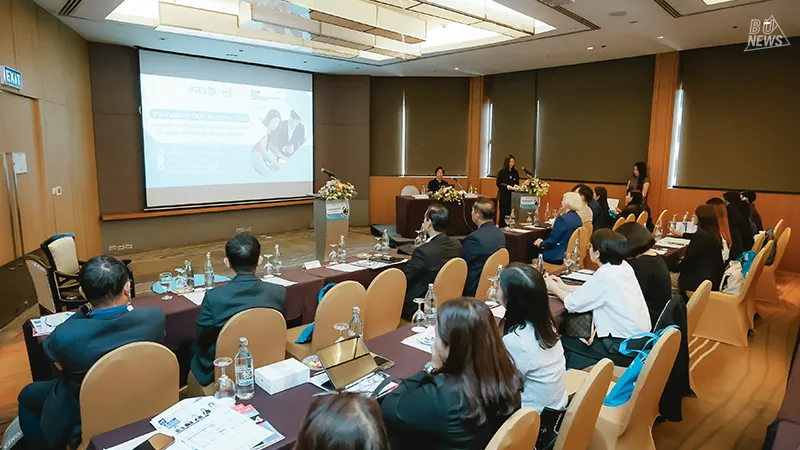
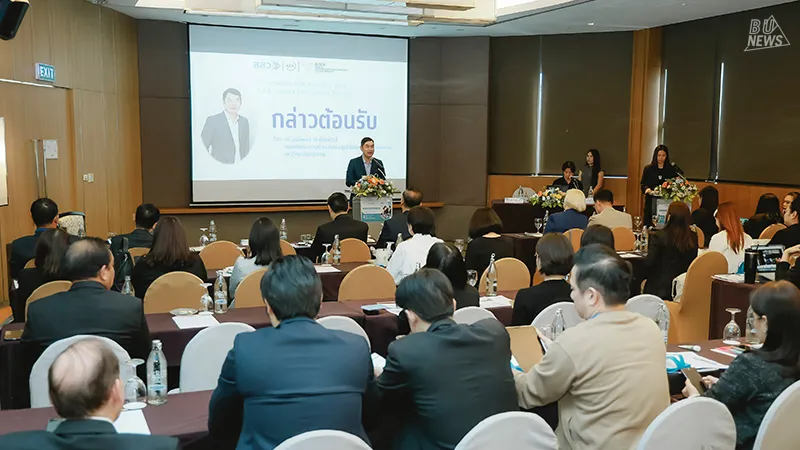
Dr.Wutnipong further elaborated on the value of the partnership: “This collaboration connects academic knowledge and research with the real-world conditions facing Thai entrepreneurs, so that GEM data carries value beyond academia — it can be used to understand the situations, problems, opportunities, and environmental factors affecting the founding and growth of businesses in a well-rounded way. This is especially true today, as Thai entrepreneurs face rapid change across technology, consumer behavior, economic conditions, business models, and competition from abroad.”
closed with confidence in the direction of the partnership: “GEM data plays a vital role in helping us understand the status and potential of Thai entrepreneurs, and the findings can inform policy, measures, and approaches to help MSMEs adapt, grow, and compete sustainably. I am confident that this collaboration between OSMEP and Bangkok University’s BUSEM will exemplify how academic knowledge and research can be connected to real-world impact in entrepreneurship development, and will serve as an important mechanism to help strengthen Thailand’s Entrepreneurial Society.”
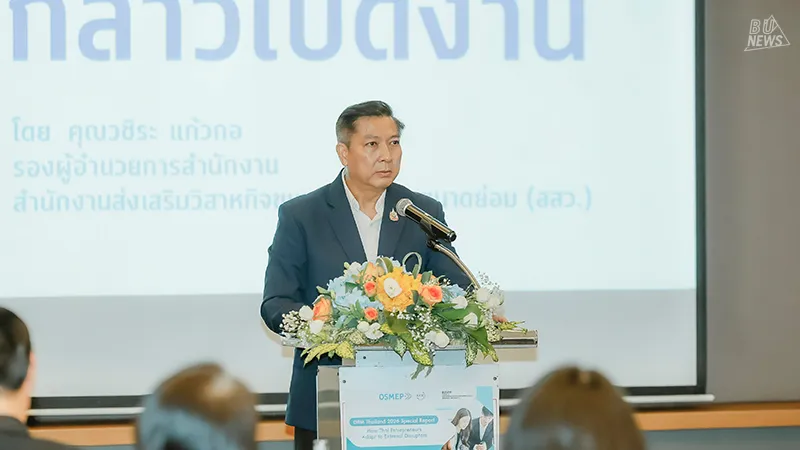
K.Wachira Kaewko, Deputy Executive Director of OSMEP, spoke to the significance of the project from a government perspective: “As is well known, a strong and dynamic Entrepreneurship Society is the core driver of a nation’s economy and a key catalyst for creating new entrepreneurs. Amid intensifying competition both domestically and internationally, an increasingly open business world and the interconnection of new markets are pressuring entrepreneurs to accelerate their adaptation, redirect their strategies, and adjust their approaches in order to remain competitive. Building an environment conducive to efficient growth therefore requires accurate, reliable baseline data and integrated cooperation from all sectors.”
He detailed the research project’s objectives: “The GEM survey project, conducted jointly between OSMEP and Bangkok University’s School of Entrepreneurship and Management, serves as an important bridge between the public-sector network and academic institutions, driving collaboration to help develop entrepreneurs’ potential and push forward competitiveness for the future. The GEM research project is another significant study that OSMEP has undertaken with Bangkok University, aiming to examine the status of and assess the level of Thailand’s entrepreneurial society according to the criteria shared among more than 50 member countries of the Global Entrepreneurship Monitor, enabling benchmarking for development purposes. It also aims to study attitudes, awareness, and participation in entrepreneurial activity among the population — broken down by demographic characteristics, country groups, and regions — and to examine the environmental factors that support entrepreneurial growth, along with policy directions and measures to support the development of the entrepreneurial society and the cultivation of a new generation of quality entrepreneurs.”
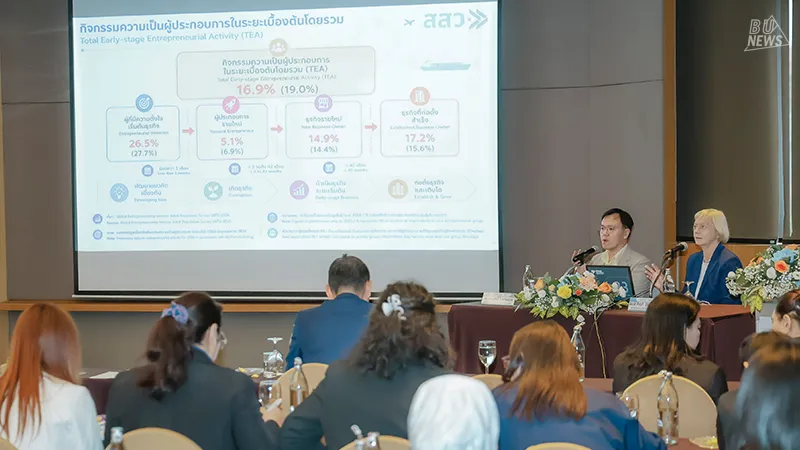
He then revealed the latest findings: “According to the GEM 2026 (B.E. 2569) study, Thailand’s overall level of entrepreneurial activity is high, at 34.1%. The Total Early-stage Entrepreneurial Activity (TEA) rate — reflecting the level of Thai citizens’ participation in starting new businesses — stands at 16.9%. This may result from the population’s positive attitudes toward entrepreneurship and continued positive engagement of Thais in the business-founding process, along with a favorable view of business opportunities. Supporting factors also include underlying social and cultural conditions and government support measures.”
Regarding the content presented at the seminar, K.Wachira noted: “Today’s key findings consist of two main parts: results from in-depth interviews with experts across critical dimensions — finance, government policy, business development programs, and marketing — analyzed and compared against previous years’ findings and other member countries; and results from an in-depth survey of a sample of 2,000 respondents, reflecting dimensions such as entrepreneurial behavior by gender, business survival rates (beyond 3–5 years), motivations for running a business, adoption of technology and innovation, and export behavior, which the research team will present in further detail.”
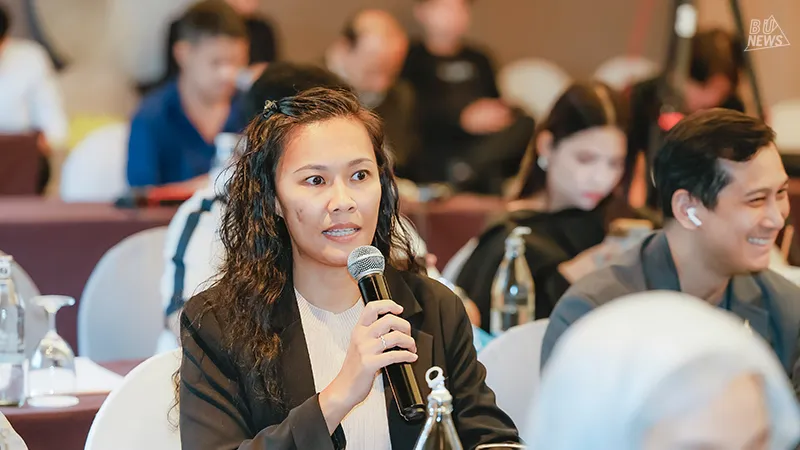
He concluded by welcoming input from attendees: “Building a strong entrepreneurial society requires engaging with the environment at both the macro and individual levels. OSMEP and the research team are ready to listen to everyone’s comments and suggestions today, in order to further develop and strengthen the study and the promotion of entrepreneurship.”