
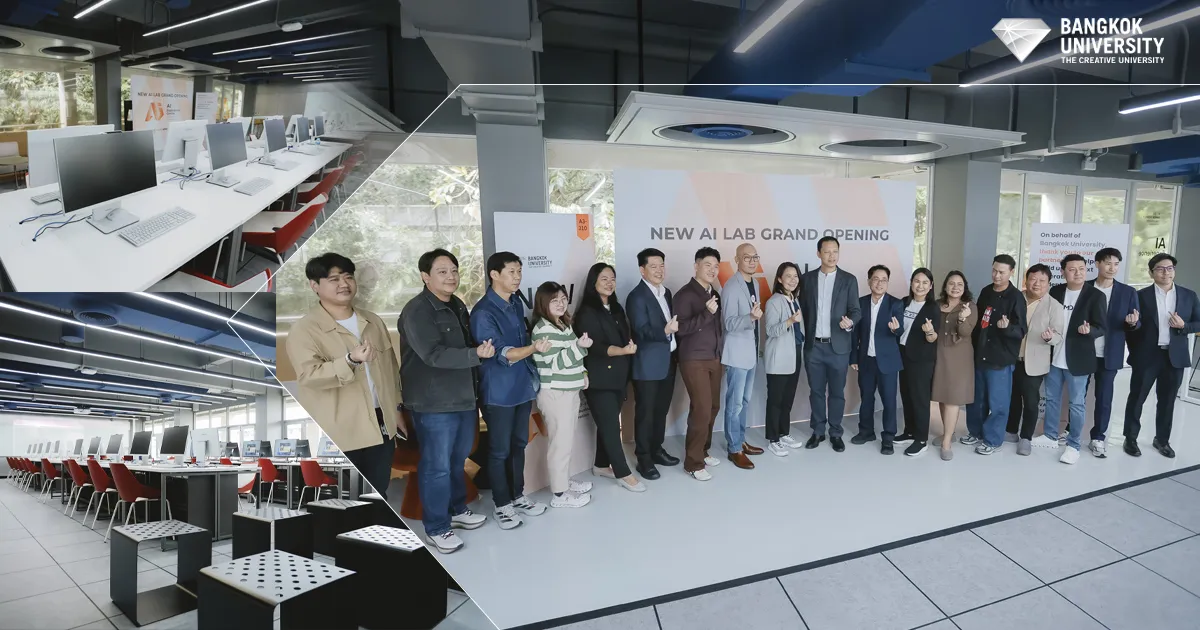
BU Launches “AI Experience Centre for Business” to Develop AI-Native Business Talent through AI-Powered PC
Creating an immersive experience that empowers students to think, analyze, experiment, and collaborate with AI to create real business value.
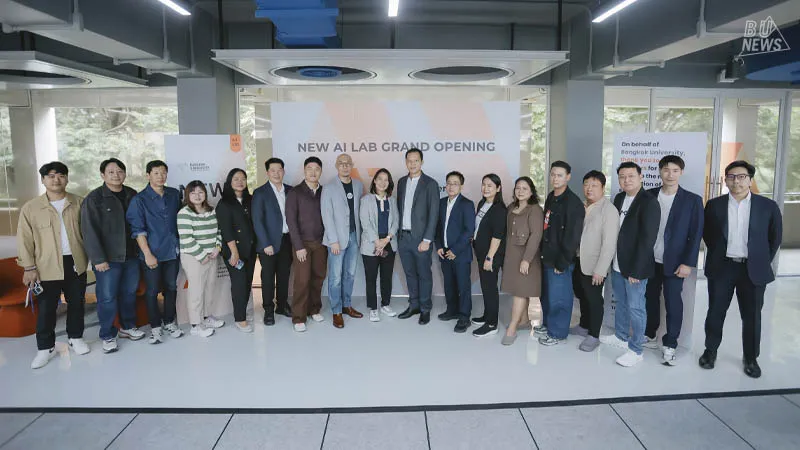
As AI continues to evolve from an “enhancement tool” into critical infrastructure for the business world, the School of Business Administration is moving beyond simply teaching students to “know AI.” Its focus is shifting toward creating an environment where students can genuinely think, work, and create business value with AI.
Digital Marketing Program, School of Business Administration, has therefore launched the “AI Experience Centre for Business,” a new learning environment that brings together knowledge of business, AI, and industry technology. Developed in collaboration with leading technology partners, led by COM7, together with Acer, AMD, ASUS, HP, and Lenovo, the initiative aims to create a learning ecosystem that responds to the demands of learning and working in the AI-driven business world.
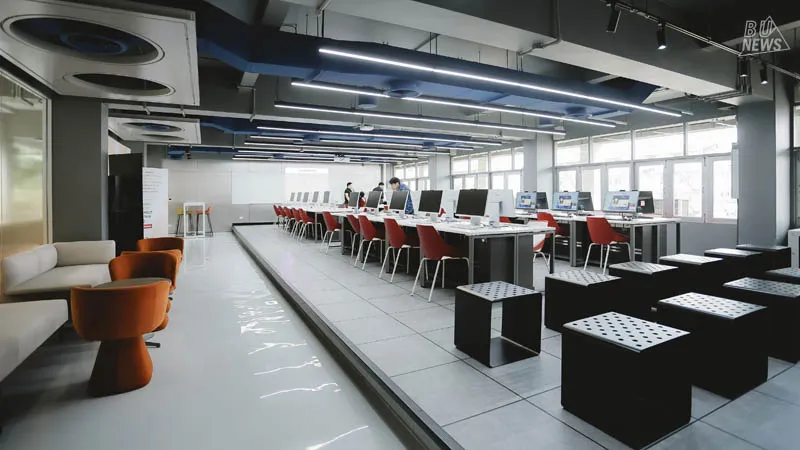
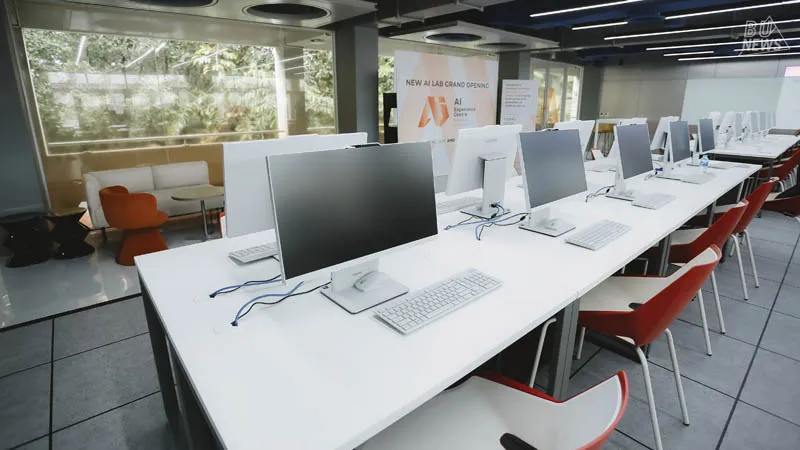
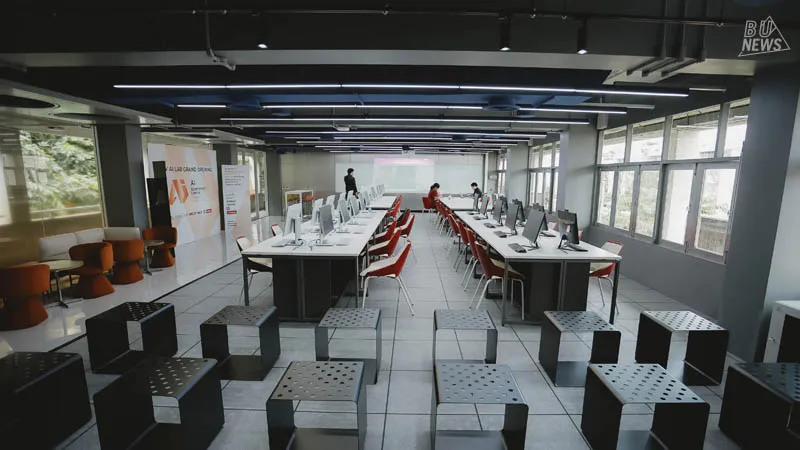
At the heart of the AI Experience Centre for Business is the integration of AI-Powered PCs into the learning infrastructure. This allows students to experience AI in real-world work contexts, ranging from Generative AI, content creation, data interpretation, productivity, and business research to AI-assisted business decision-making.
From Computer Lab to Business AI Lab
Traditionally, computer labs have primarily served as spaces for accessing software. In the AI era, however, the role of computers is evolving, with AI-Powered PCs becoming increasingly integrated into everyday workflows—particularly in business fields that require data, creativity, and decision-making capabilities.
For business students, the focus is not on understanding hardware from an engineering perspective, but on seeing how AI can be applied in real business contexts—from marketing analytics and Generative AI for content and creative work to customer insights, business research, workflow automation, and AI-assisted decision-making.
The goal is therefore not to turn every student into an AI engineer, but to develop AI-Native Business Talent who can understand business challenges, select the right AI tools for each situation, evaluate AI-generated outputs, and transform technology into meaningful business outcomes.
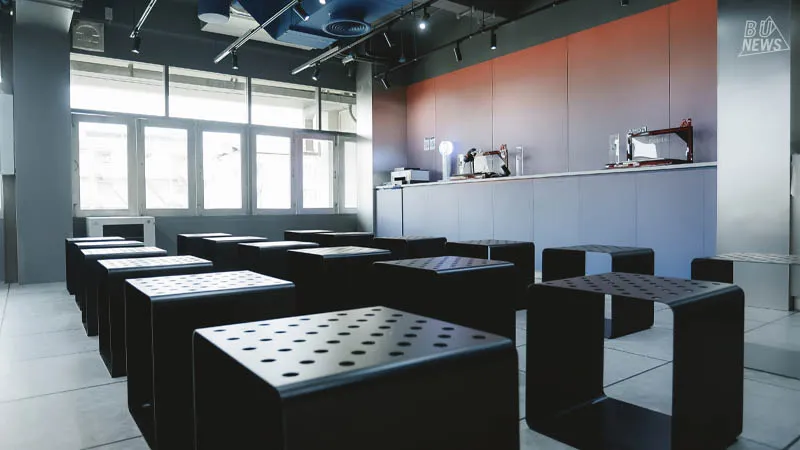
From “Using AI” to “Working with AI”
Although Generative AI has become increasingly accessible, using AI effectively requires more than simply knowing how to use the tools. Future professionals need to be able to formulate the right questions, understand and analyze data, evaluate the quality of AI-generated outputs, and recognize when to rely on AI and when human judgment is essential.
The AI Experience Centre for Business is therefore designed to be more than a space for experimenting with new technologies. It serves as an environment where AI can be integrated into real-world contexts including Marketing, Customer Experience, Business Analytics, Content Creation, Entrepreneurship, and Decision-Making.
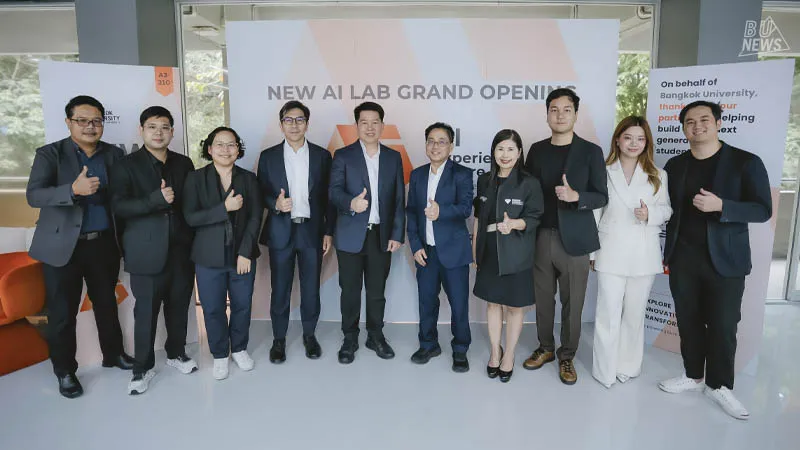
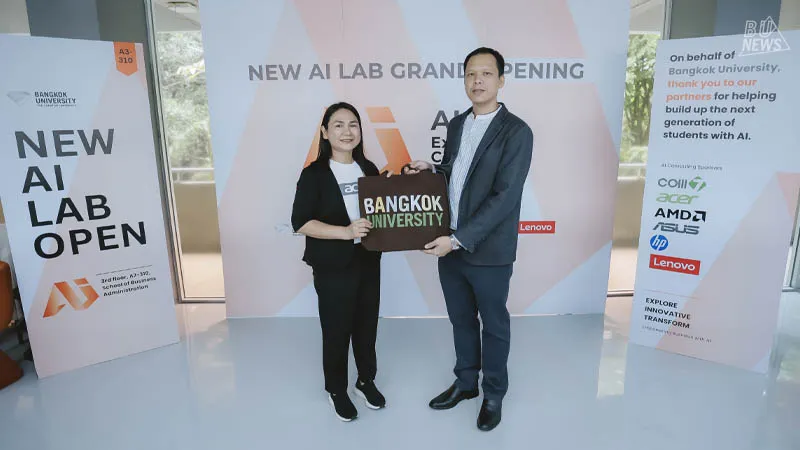
Building an Industry-Driven Learning Ecosystem with Technology Partners

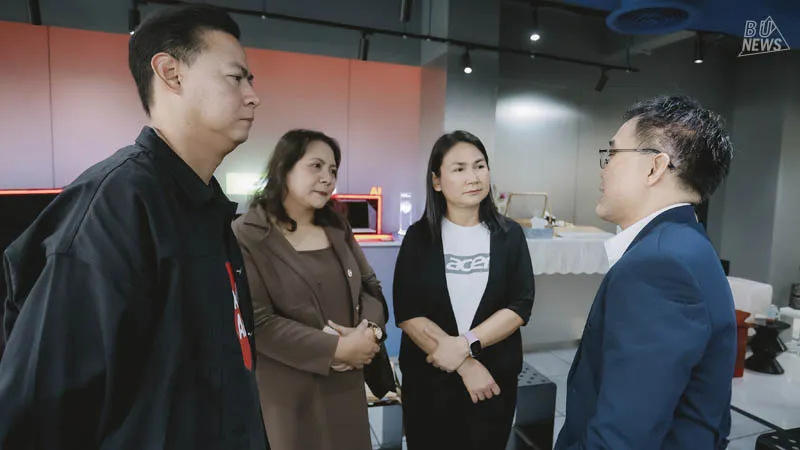
Another key strength of the initiative is the collaboration between the university and the technology industry. The project was initially driven in partnership with COM7, with K.Takon Niyomthai, Head of Investor Relations at COM7, among those who helped initiate the collaboration. The partnership has since expanded to include leading technology companies AMD, Acer, ASUS, HP, and Lenovo, working together to build a technology ecosystem for AI learning.
The collaboration goes beyond hardware support. It represents a joint effort to establish technology and learning partnerships that give students hands-on exposure to hardware, software, AI capabilities, and use cases that are increasingly relevant to the business world.
As technology continues to evolve rapidly, collaboration with industry plays an important role in bridging education and the workplace. It enables students to learn from technologies and practical applications that are already being used in real business environments.
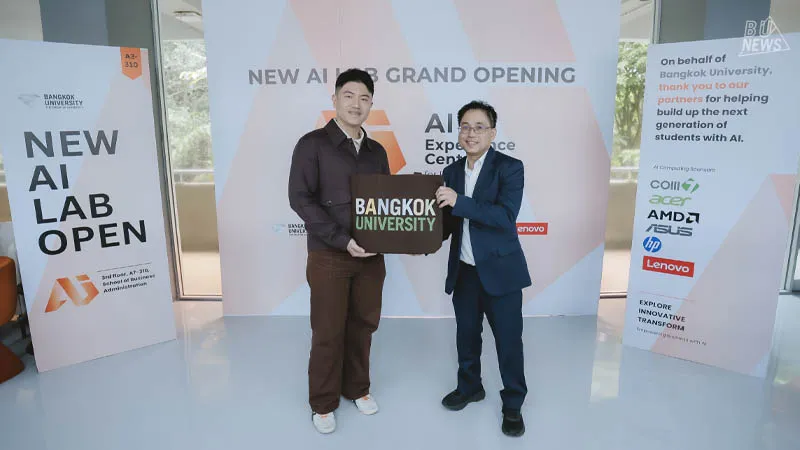
Turning Vision into Learning Experience
The initiative is being driven under the leadership of Dr.Krairoek Pinkaeo, Dean, School of Business Administration, with Dr.Kittipoom Supamontri, Director, Digital Marketing Program, leading the development of the project concept, and A.Tam Tanjaya, Assistant Director of the Digital Marketing Program, playing a key role in overseeing and driving the project forward.

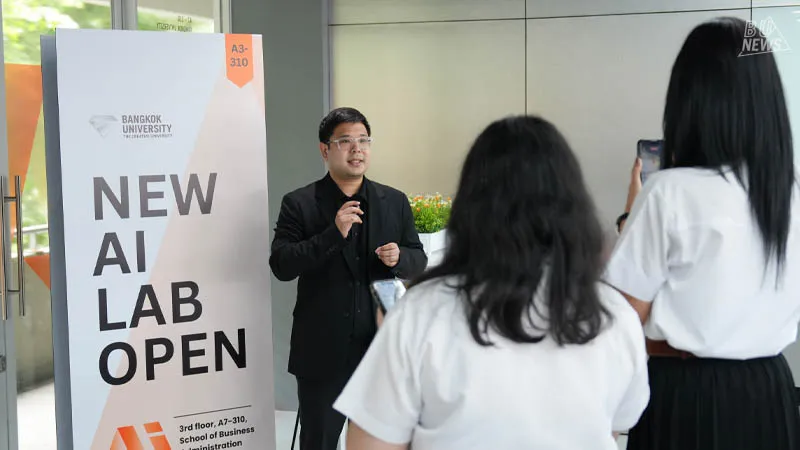
For the AI Experience Centre for Business, the value lies not simply in having access to cutting-edge technology, but in designing an environment where technology can be transformed into meaningful learning experiences.
Students can use the centre to learn, think, experiment, create, and develop projects connected to real business challenges. Investment in technology infrastructure becomes even more valuable when it can be transformed into an authentic learning experience for students.
When Business Schools Need to Keep Pace with the AI Era
AI is rapidly blurring the boundaries between Technology Education and Business Education. Marketers need a deeper understanding of data. Analysts need to be able to work effectively with AI. Entrepreneurs can develop and test prototypes more rapidly, while business leaders need to evaluate large volumes of information and options generated by AI within a short period of time.
Preparing students for the future of work, therefore, may not simply mean adding more “AI courses.” It means creating an environment where AI becomes an integral part of the learning process and business practice.
The AI Experience Centre for Business marks another important step for the School of Business Administration, Bangkok University, in developing a new generation of business professionals who do more than simply “know how to use AI.” They are equipped to think and work with AI, transforming technology into opportunities and real business value in the workplace.