From the Classroom to the Real Site — "School of Architecture" Joins Forces with the Klong Sam Community to Develop the Landscape and Communication System
The School of Architecture brought its design knowledge into real practice together with the Ban Klong Sam community, developing a signage and wayfinding system while creating a genuine learning experience for students through a real-world project.
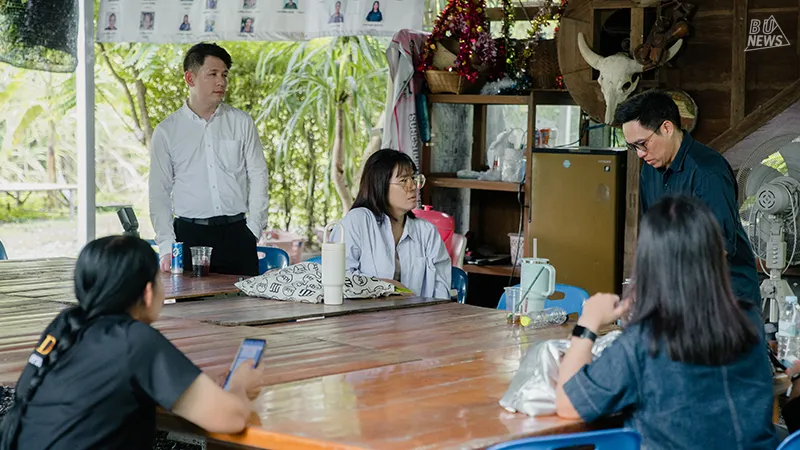
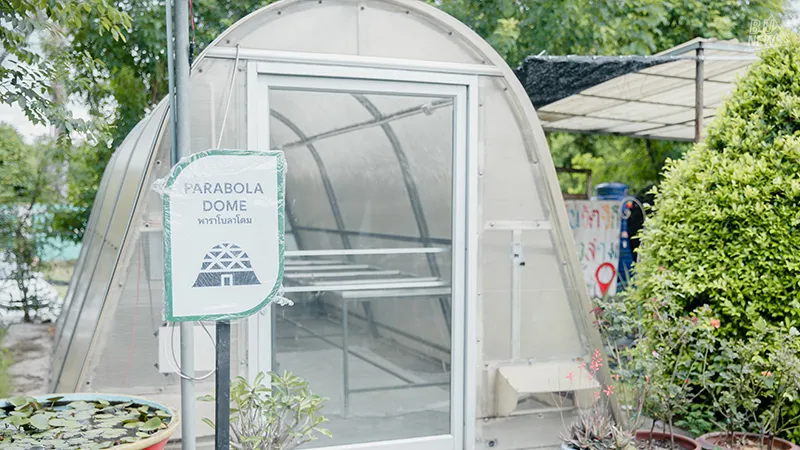
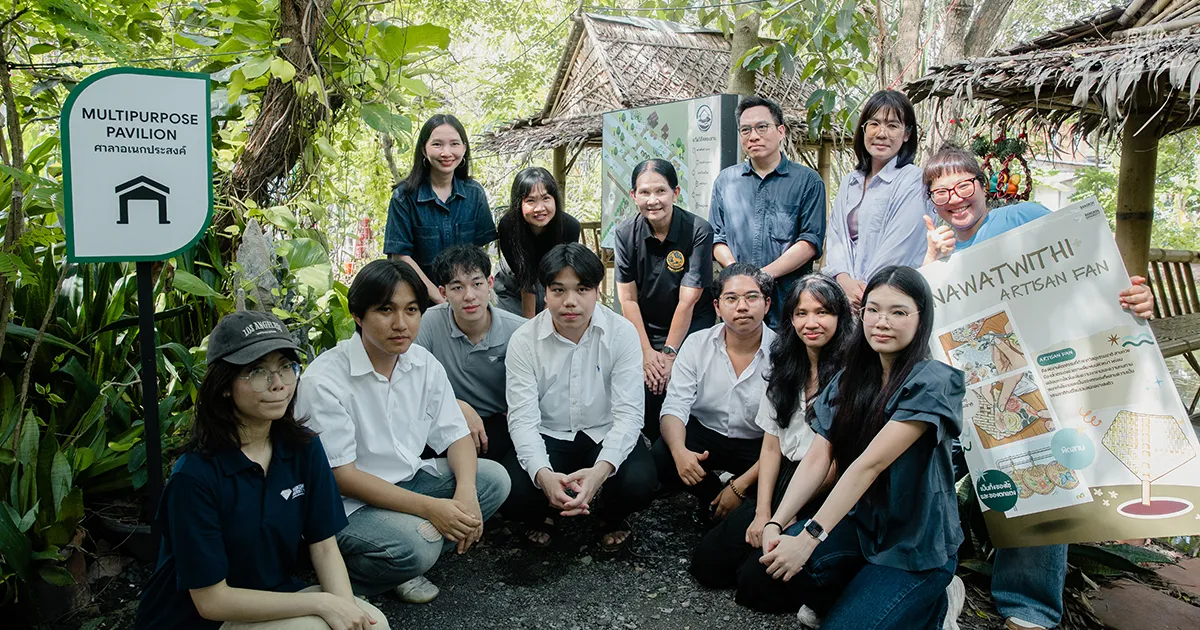
From a classroom assignment to hands-on work in a real location, students from the School of Architecture, Bangkok University, jointly developed a landscape and visual communication system project at the Sufficiency Economy OTOP Nawatwithi Learning Center, Ban Klong Sam, Pathum Thani Province. The work began with a site survey, conversations with community members, and participation in workshop activities, before moving on to actual design and production, aiming to help the area communicate its identity and learning routes more clearly.
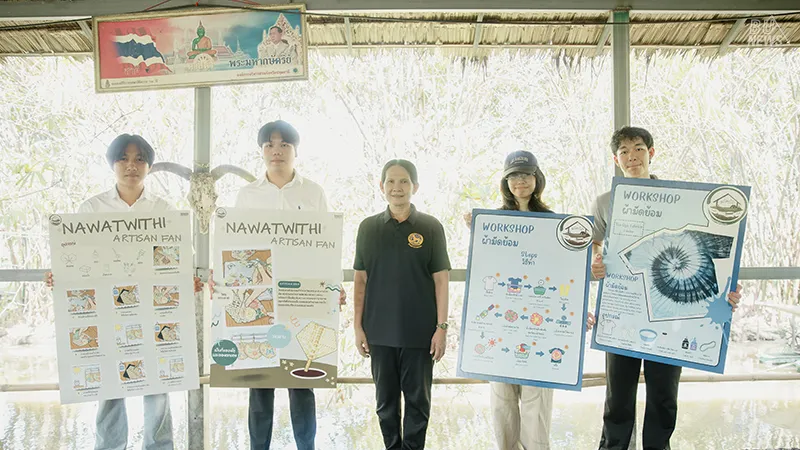
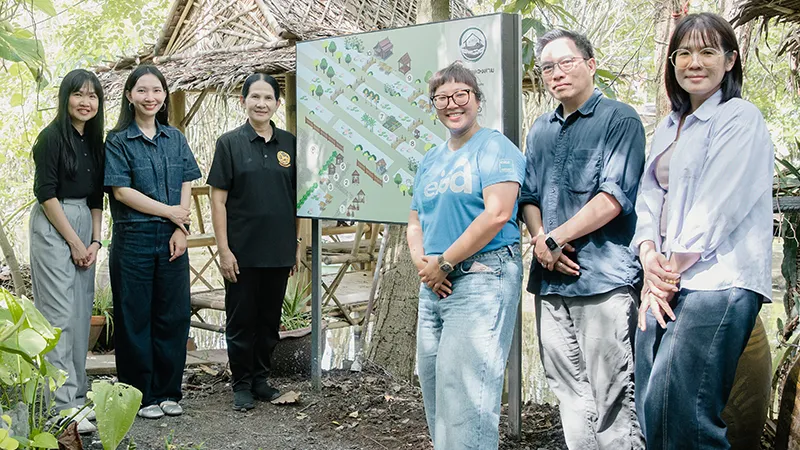
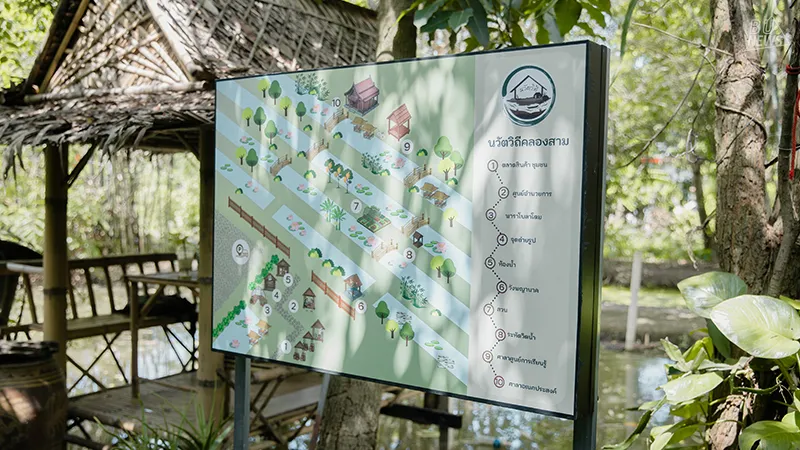
Ajarn Krittiya Piya-arun, Head of the Interior Architecture Department, said the project originated from the idea of taking architecture and design knowledge out of the classroom and into the real world, allowing students to learn from actual context and real users. “We didn’t go in to change what the community already is — we wanted to help communicate what the community already has more clearly, more systematically, and in a way that better reflects the identity of the area.” This process led to the development of the visual communication system, including a project map, directional signs, signs marking learning points, and information signs at each workshop activity station.
From a time when the project was seen as just another course assignment to the day the students saw their work actually installed and put to use, their feelings changed. “Seeing what we designed actually being made and used today makes me feel even prouder, because our work didn’t just end with submitting it to the professor — it can create real benefit for the community.” For the School of Architecture, this project is therefore more than just delivering a finished piece of work; it is about connecting classroom learning with real experience, allowing students to see everything from the root of the problem, the design process, and listening to feedback, through to creating work that concretely benefits the community.
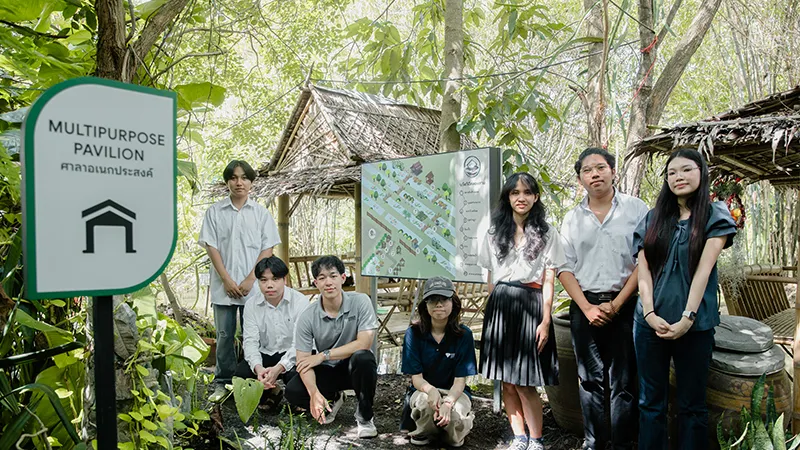
“At first I felt excited, because this was work designed for a real place,” said Diamond — Kantinantana Yok-in, a fourth-year student in the Interior Architecture Department, School of Architecture, recalling how the work began. The key assignment was to study the identity of the Klong Sam community and then develop it into the design of signage, maps, and information for the workshop activities. Students were involved from the site survey and interviews with community members, to trying out the activities themselves, before bringing the information back to analyze and jointly develop design concepts.
The design work did not come solely from the students’ own perspective, but was a process carried out together with the community, with professors providing guidance from data analysis through to design development, including creating full-scale prototypes to test whether the work could actually be used on site. “This work has real users. We didn’t design based only on what we thought — we had to listen to what people in the area actually needed. The biggest lesson I learned is that something that’s only beautiful may not be enough; it also has to be genuinely usable and suited to the people in the area,” Diamond said.
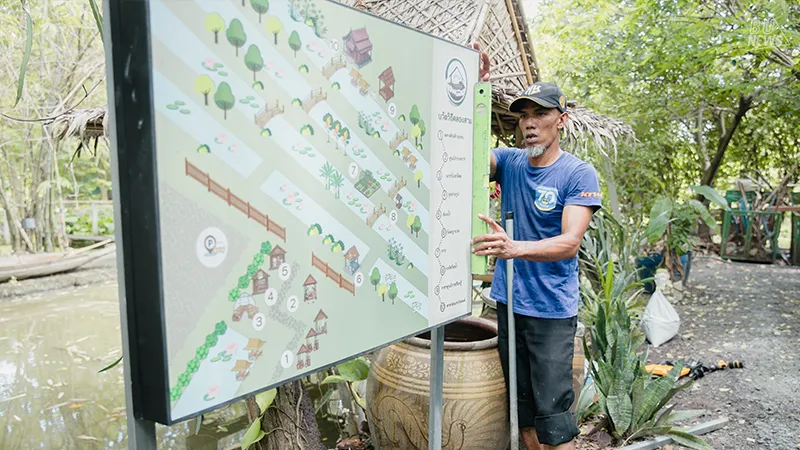
From the community’s perspective, the resulting work has helped concretely solve communication problems within the area. Khun Rungnapa Kaewtham, or “Kamnan Nok,” President of the Sufficiency Economy Learning Center, Village 16, Klong Sam Subdistrict, Klong Luang District, Pathum Thani Province, thanked the faculty and students of the School of Architecture, Bangkok University, for their guidance in improving and developing the landscape of the learning center. This included designing and installing map signs, signs marking various points, and signs for the workshop activities that clearly explain the details of each activity, helping visitors and study-tour groups understand the area and travel to different points more conveniently. She also expressed the view that this project genuinely responds to needs and helps solve problems for the people and the community.