
Conveying ESG Concepts Through Art: "Chance to Change," Sparking Creative Ideas for Social Transformation
Opened up space for high school students (Grades 10–12) and university students to express their creativity, experiences, and perspectives on the world
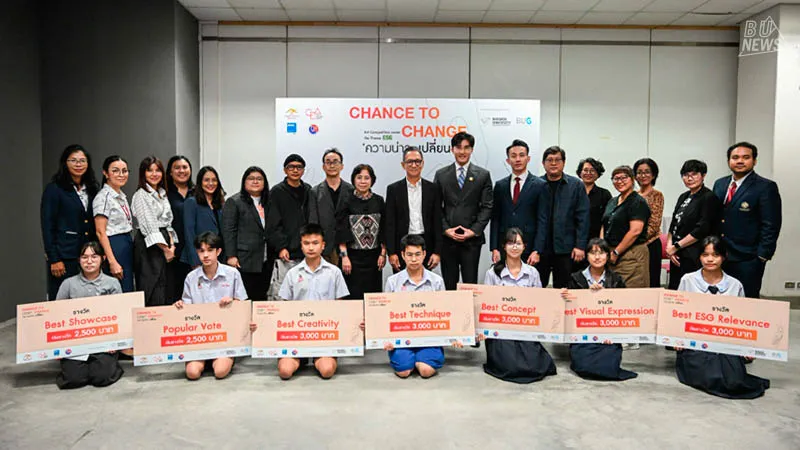
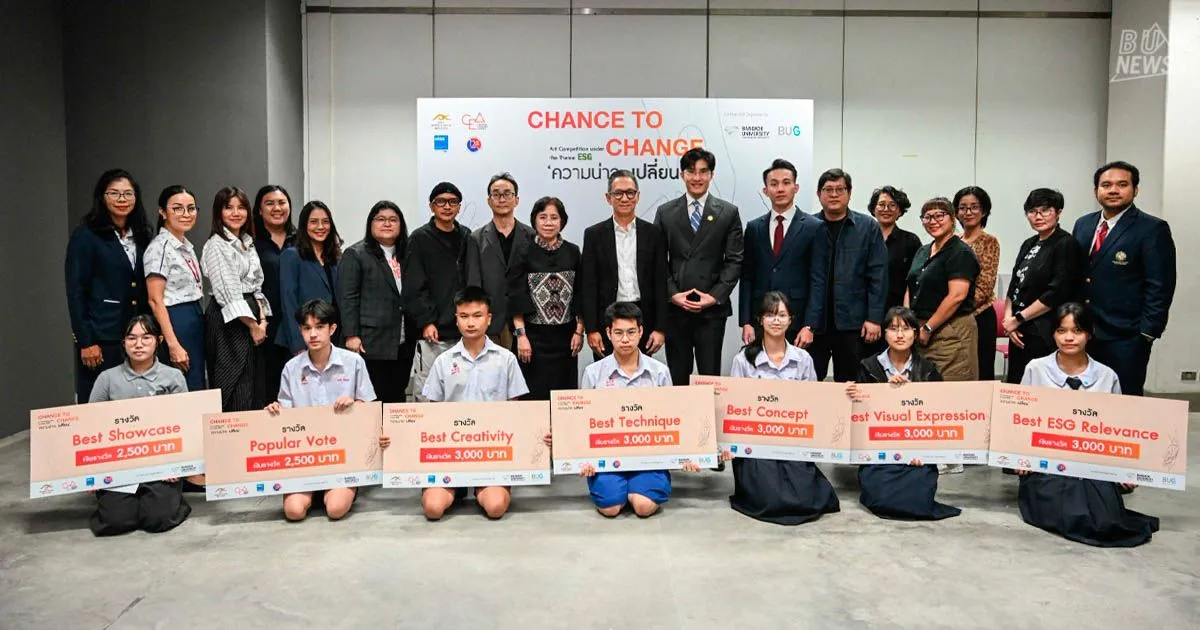
Bangkok University, through the School of Fine and Applied Arts and the Bangkok University Gallery (BUG), in collaboration with the Office of Contemporary Art and Culture (Ministry of Culture), the Creative Economy Agency (Public Organization), the EISA Project of Thai Beverage Public Company Limited, and the Brothers of St. Gabriel in Thailand, organized the art competition “Chance to Change” under the theme of ESG (Environmental, Social, and Governance). The project opened up space for high school students (Grades 10–12) and university students to express their creativity, experiences, and perspectives on the world and society through a variety of art forms. The project received collaboration from relevant government agencies and organizations that recognized the potential of the younger generation to interpret ESG issues through their own language and perspective, while also connecting the world of art with important issues emerging in society and globally.
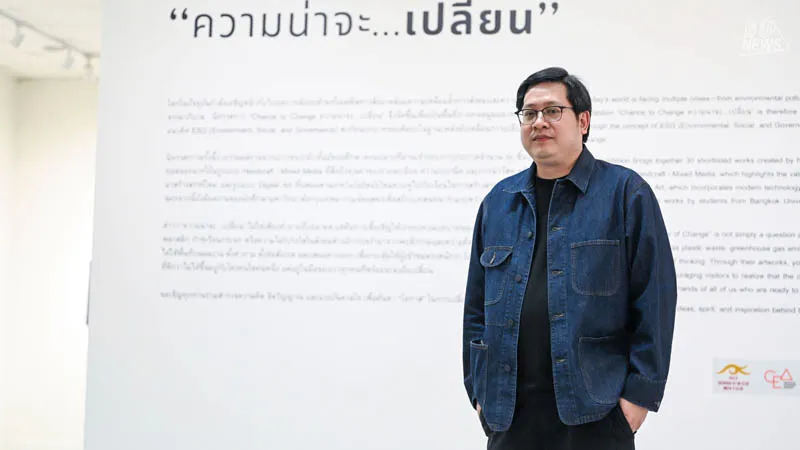
Dr.Pattarawut Subyen, Dean, School of Fine and Applied Arts, , explained the project’s origin: “We chose ESG as the theme for this competition because it’s a contemporary issue receiving global attention, and we wanted to create an opportunity to see how the younger generation, with their knowledge of art, could blend ESG with creativity and express it in various forms. Reviewing the submissions, we found that many participants presented compelling ideas, particularly by connecting the concept to their own experiences and surroundings — meaning the works didn’t just address environmental issues, but also covered social and governance dimensions, such as inequality, coexistence in society, corruption, and questioning human behavior. Art can spark awareness of ESG-related issues, especially when the younger generation takes an interest in these topics — which, in the long run, benefits society, since art can at least serve as a starting point for raising questions and building deeper understanding.”
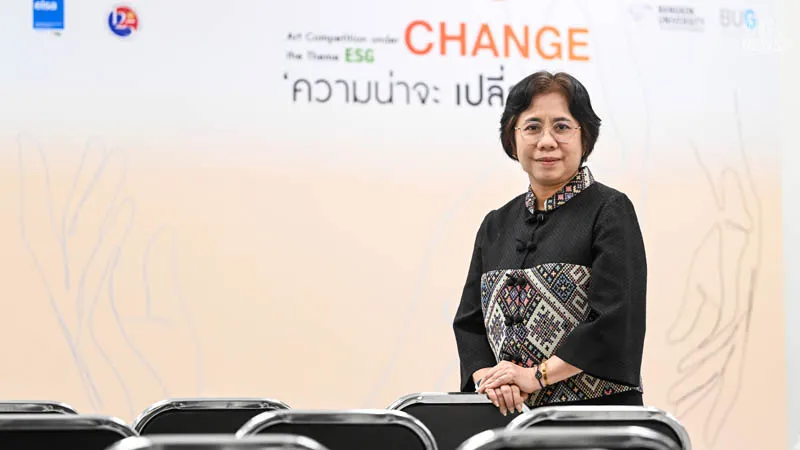
Ms. Somlak Klongklaew, Fine Arts (Visual Arts) Promotion Specialist at the Office of Contemporary Art and Culture, Ministry of Culture, said: “This collaboration builds on our ongoing efforts to support artists and young people by giving them a platform to showcase their potential. At the same time, environmental and sustainability issues are a priority for the government. Combining these two areas through art is another way to help communicate ESG to the general public in a way that fosters understanding and a stronger sense of connection to these issues. Seeing the young participants’ work was both impressive and exciting, as each of them was able to blend concepts together and create work in their own unique style, ranging from digital art to other media formats.”
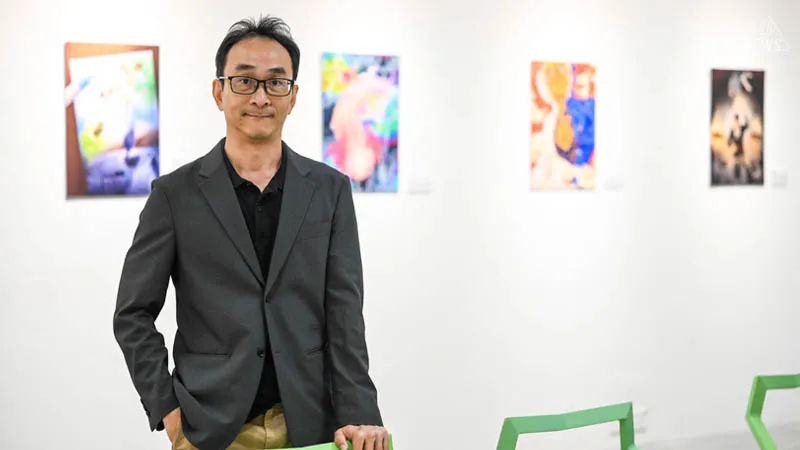
Meanwhile, Mr. Varith Teeraprasert, Business Strategy and Innovation Development Specialist at the Creative Economy Agency (CEA), said: “Translating ESG — a complex issue — into visual communication is a real challenge for creators. The submissions featured a wide range of ideas and presentation styles. While some works were still developing technical and artistic skills appropriate to the creator’s age, what stood out was the ability of these young people to translate their own ideas into visuals that communicate clearly to viewers.” He also proposed future directions for the project, suggesting that ESG-themed creative work could evolve into a multidisciplinary approach connecting art, science, and technology — moving beyond 2D visual presentations toward creating products, objects, interactive media, or solutions capable of turning ideas into concrete problem-solving and real change.
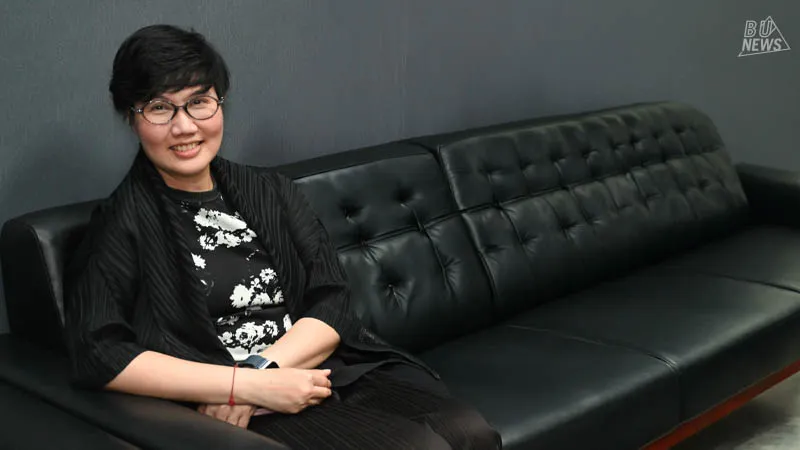
Dr. Chayanut Silapasat, Head of the Bangkok University Gallery, said: “As the Bangkok University Gallery (BUG), we are not merely a space for displaying art, but a space for learning, inspiration, and dialogue with society. We don’t expect art to change the world immediately, but we hope to begin by shifting something at the level of people’s thoughts and perspectives. The young participants’ work in this exhibition reflects environmental and social issues, using art as a tool to raise questions and reflect their own views on environmental, social, and governance issues — communicated through the diverse experiences and perspectives of these emerging artists. As a gallery, our role isn’t just to select works for display, but to create a space where people can see, think, and engage in conversation through art.”
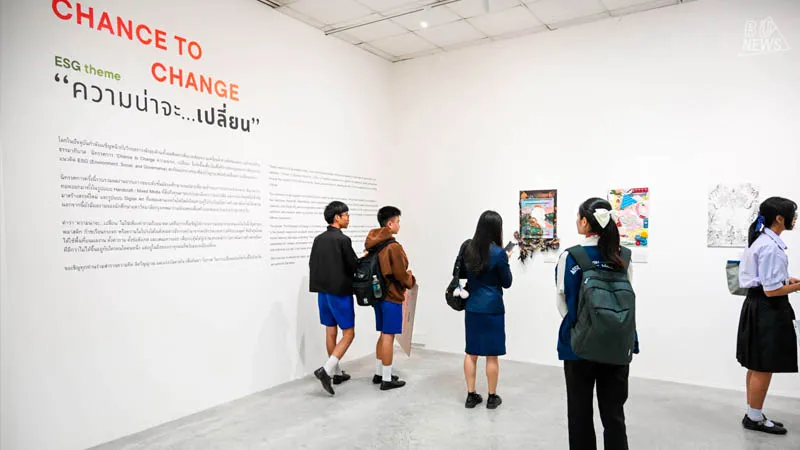
More than a hundred submissions were reviewed by a panel of expert judges, resulting in the following awards:
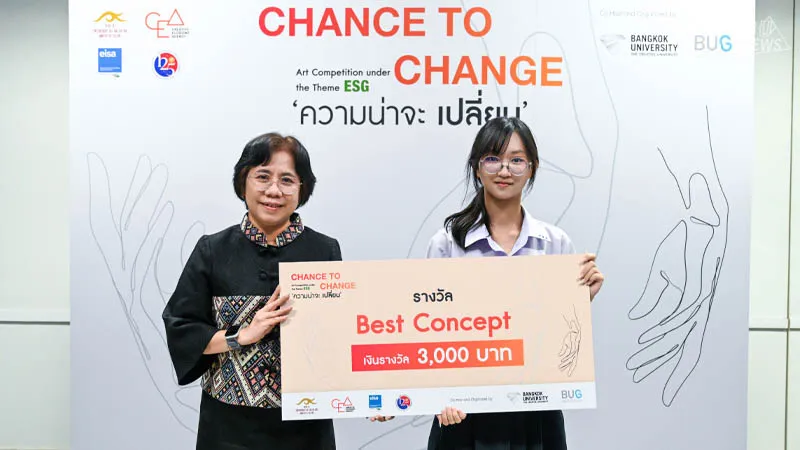
Best Concept: Ms. Thanjira Trichaiyaporn, Saipanya Rangsit School, for the work “WHAT’S NEXT?”
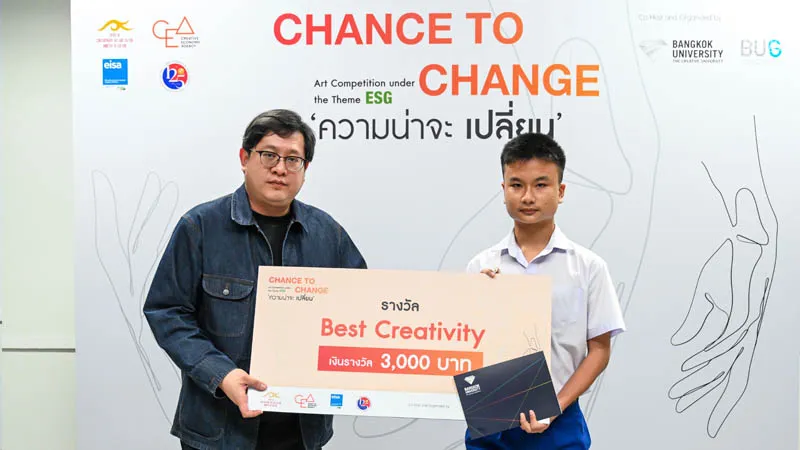
Best Creativity: Mr. Pannawich Sophareudee, Assumption College Samutprakarn, for the work “Piang Plian” (Just Change)
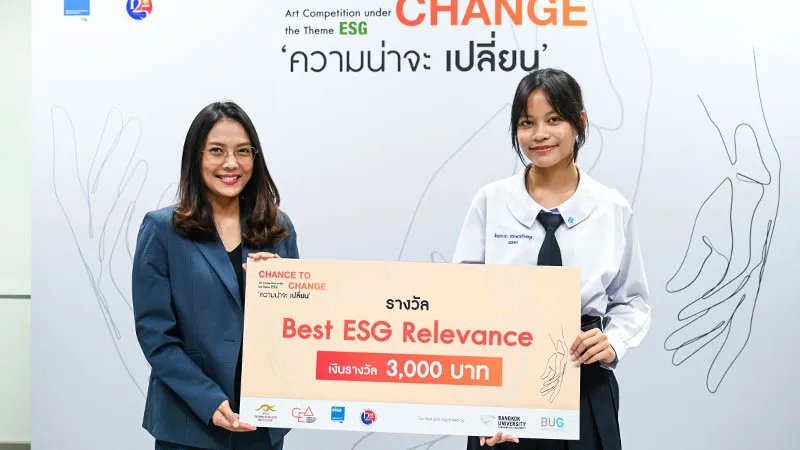
Best ESG Relevance: Ms. Siraprapa Pramoonchaiyasakul, Sacred Heart Convent School, for the work “Hen Rue Mai?” (Do You See?)
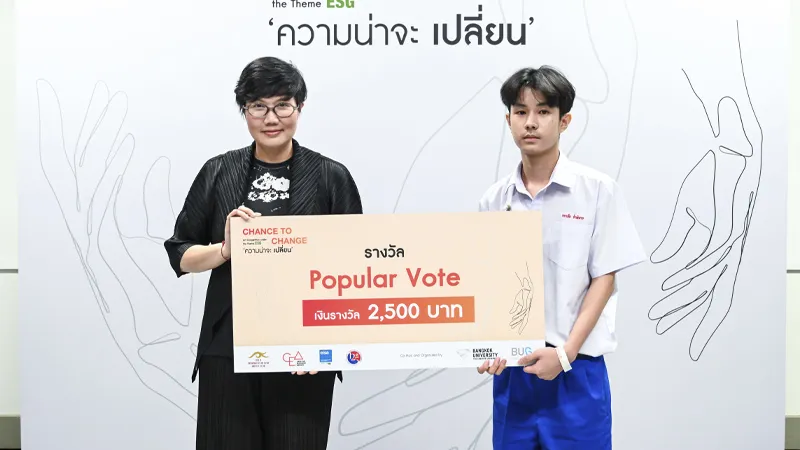
Popular Vote: Mr. Kanchai Jampimai, St. Louis Chachoengsao School, for the work “FAST”
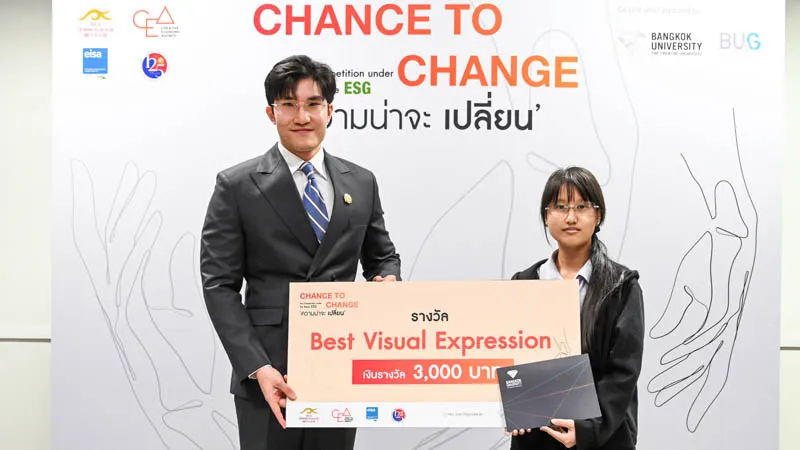
Best Visual Expression: Mr. Tinmanee Nantasanti, Suankularb Wittayalai School, for the work “Butterfly Effect”
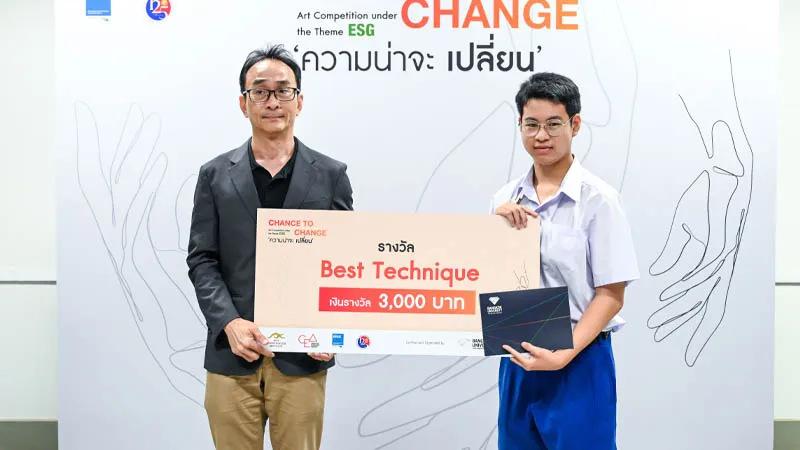
Best Technique: Mr. Theerat Rungrattanaset, Assumption College Samutprakarn, for the work “Kamnoet Mai Chak Sing Thi Thuk Thing” (Rebirth from What Was Discarded)
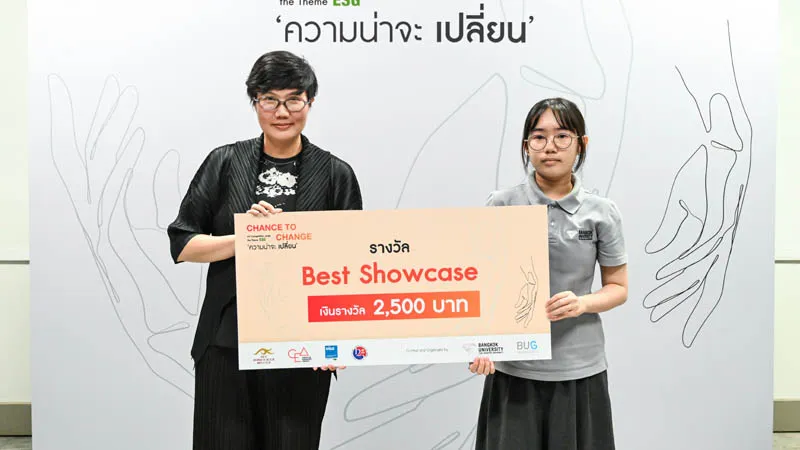
Best Showcase (University Level): Ms. Ingthian Thanapob, student from the Faculty of Fine and Applied Arts, Bangkok University
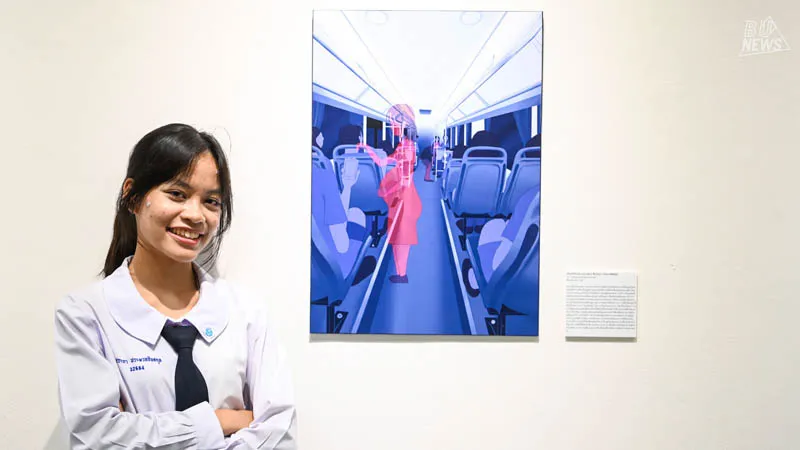
One of the award-winning works in this project is “Hen Rue Mai?” (Do You See?) by Ms. Siraprapa Pramoonchaiyasakul, a student from Sacred Heart Convent School, who won the Best ESG Relevance award. Drawing on her everyday experience riding public buses, she raised questions about visibility and consideration for others in society. She shared: “After understanding the meaning of ESG, I chose to depict something close to home — especially situations I regularly witness on buses, such as elderly people or pregnant women having to stand while some passengers who could give up their seats choose to remain seated. This raised the question: do we not give up our seat because we don’t see them, or because we don’t care? The work was created using digital illustration techniques, combining a photo I took myself of a bus with digital drawing done through software, using a technique that renders the elderly character and pregnant woman semi-transparent — as if they were people ‘standing right in front of us, yet unseen’ — to reflect the question of recognizing the value of others in society.”
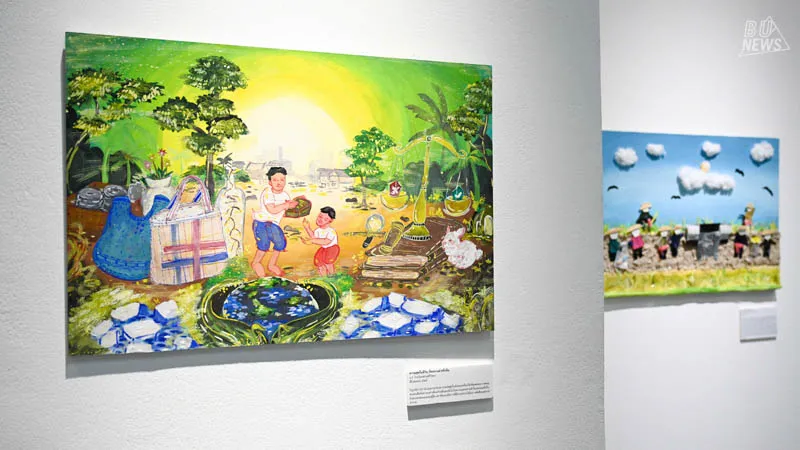
The “Chance to Change” project, therefore, is not merely an art competition platform, but a space that gives young people the opportunity to interpret global issues through their own perspectives, question what happens around them, and use art as a tool to communicate with society. Bangkok University hopes this project will serve as another mechanism to support the potential of the younger generation, connecting the discipline of art with contemporary issues, and creating opportunities for young people to learn through hands-on experience — developing ideas that not only raise awareness, but can also lead to concrete change in the future.