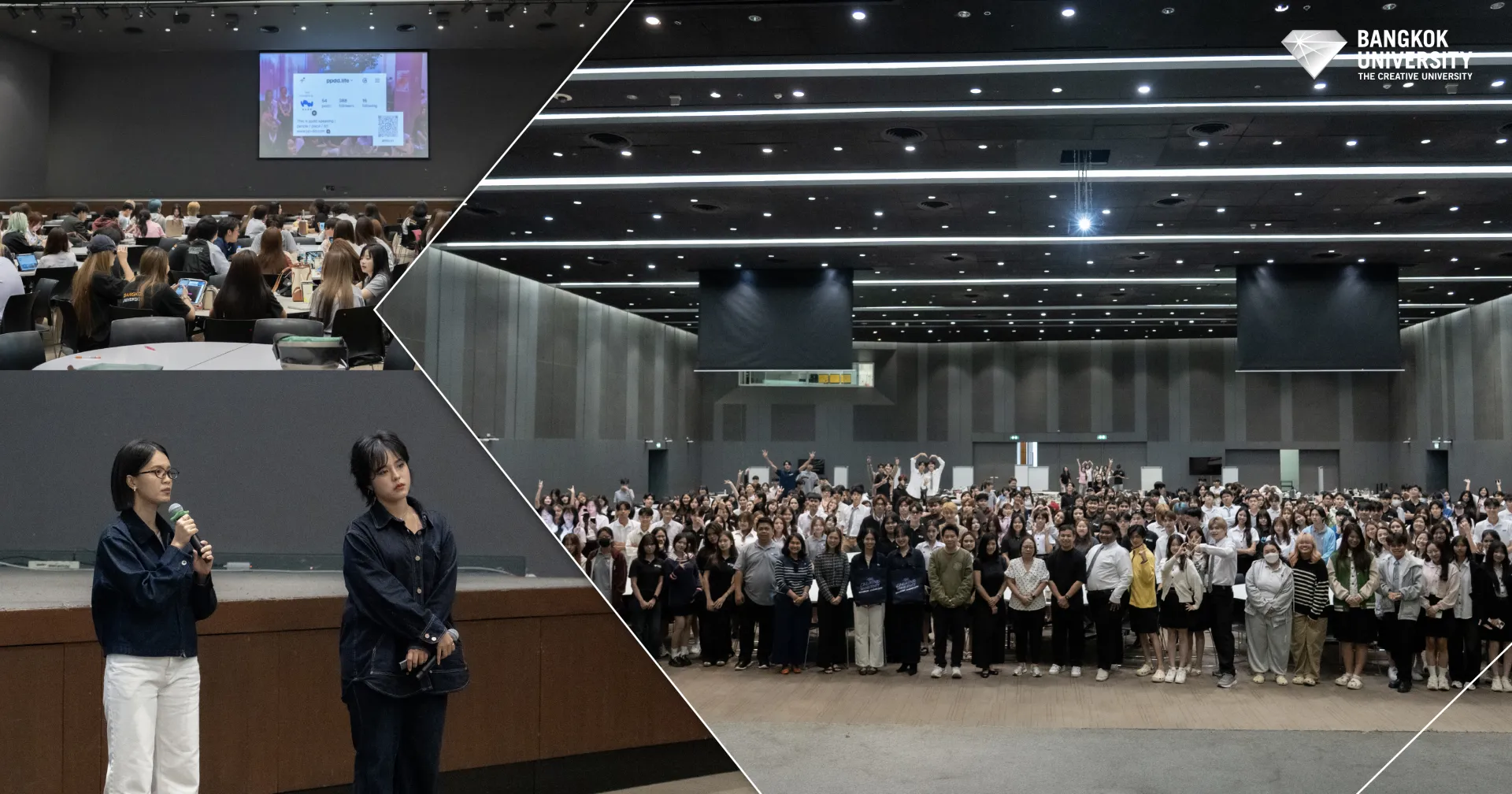
Communications and New Media Department, School of Communication Arts, Opens a Platform for Students to Learn Brand-Building from "Belief" to "Value Through Action" with Pandaung
giving over 500 first-year students the opportunity to learn about brand-building and marketing communication concepts from real-world practitioners. 
Communications and New Media Department, School of Communication Arts, held a special lecture as part of the course Journey to Communication and New Media, giving over 500 first-year students the opportunity to learn about brand-building and marketing communication concepts from real-world practitioners. The event featured Ms. Pakhwan Duangnoi, Brand Development Manager and Content Manager, and Mr. Krommathan Rukkhaphan, Senior Creative Content, from the brand Pandaung, who shared their experience under the topic “From Belief to Brand.” Their talk reflected how brand-building in the digital age doesn’t begin with a product alone, but starts with understanding people, beliefs, and the values a brand wants to convey.

The speakers shared the origin story of “Pandaung,” which was built on an insight from younger consumers who see “belief” not as superstition, but as a source of encouragement and support in daily life. This insight was developed into a brand with a distinctive communication style — friendly, fun, easy to understand, and effectively connected to the lifestyle of the younger generation. They also explained the brand’s development journey, from building a follower base and developing content, to organizing offline activities and creating various forms of shared experiences between the brand and consumers.
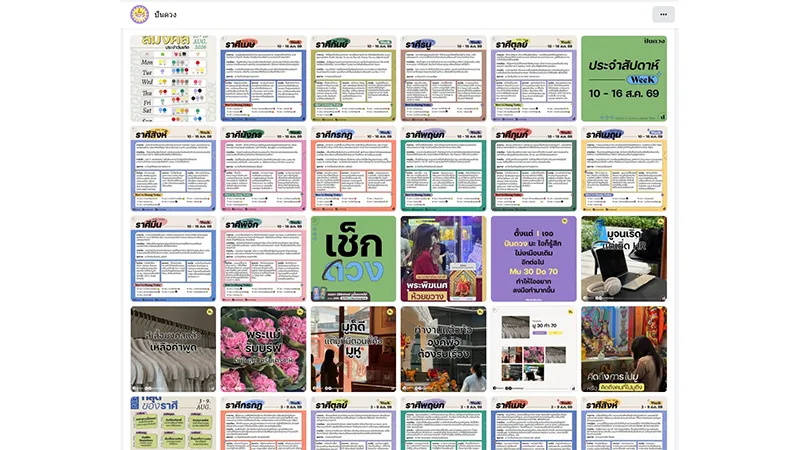
Another key theme of the brand is the concept of “30% Belief, 70% Action,” which reflects the brand’s stance that belief is only part of the driving force, while true success comes from taking action oneself. This concept not only sets the brand apart but has also been developed into creative campaigns that promote self-awareness, encouragement, and communication focused on creating value for followers — rather than centering solely on fate or fortune.

The speakers also shared their thought process behind content strategy — from uncovering target audience insights and defining the brand’s stance, to building identity through character and tone of voice, as well as designing interactive content and activities to drive follower engagement. They cited examples such as the “MBTI Sai Mu” campaign and “Moo-cycle,” which creatively blended sustainability concepts with brand communication in a way that resonated with the behavior of younger consumers.

This activity helped students learn the brand-building process through a real case study, highlighting the importance of consumer insight, brand value creation, content strategy planning, and communication that builds long-term relationships with consumers — essential knowledge for working in communication, marketing, and brand-building within the digital-age creative industry. It also inspired students to apply these concepts to their own future work and creative projects.